The Monstera ‘Albo Variegata’ is a highly sought-after houseplant famous for its dramatic, green-and-white marbled leaves. Because of its striking appearance and scarcity, cuttings can cost hundreds of dollars. Caring for it requires specific conditions to keep it healthy and vibrant, it grows much slower and is more delicate than standard Monsteras. Avoid direct sunlight, as the white parts burn very easily. Water only when the top few inches of soil feel dry. If grown in a pot, let water drain fully out of the bottom to prevent root rot
The Delicious Monster is a popular tropical plant famous for its large, hole-filled leaves and exotic fruit that tastes like a mix of banana and pineapple. It thrives as an indoor plant or as an outdoor climber in Zambia. Grows best in areas with dappled or partial light and well-drained soil. Monstera fruit is highly nutritious. It is a great source of vitamin C for your immune system, potassium for your heart, and dietary fiber for healthy digestion. However, it comes with a strict safety warning. The fruits can only be eaten when the green, hexagonal scales on the outside fall off naturally. If you eat the fruit while the scales are still attached, microscopic crystals (calcium oxalates) will cause a severe burning and stinging sensation in your mouth.
Evergreen tree, large, glossy leaves, fruit is firm and fleshy, light green, turns soft, yellowish-white with a fetid odour when ripe, flavour is earthy, cheesy, wasabi-like, with a tinge of sourness. Noni roots, stem, bark, leaves, flowers, and fruit are used in traditional medicine, anticancer properties. Fruit juice is rich in nutrients and antioxidants
Very easy to grow, fruit is very nutritious with many medicinal properties and can be eaten fresh out of hand or to make jams, pies, tarts, puddings, Silvopasture, Leaves are highly palatable and digestible, an excellent protein-rich fodder for livestock and can be used as supplements replacing concentrates for dairy cattle, it increase milk production of lactating goats, cows, sheep and rabbits, and improve livestock productivity.
Leaves contain high concentrations of fiber and protein, in many countries, white mulberry leaves are used as a food source for both animals and humans, white mulberry fruits are juicy and sweet-tart with an impressive nutrient content and several health benefits. Despite its name, fruit is typically white, but may ripen to pale red or deep purple, used to make juice, tea, jam or dried snacks.
Annual, fast and easy to grow, produce an abundance of flowers in rich, warm colours, fights insect pests, flowers, leaves, stems, and young seed pods are edible, rich in nutrients, makes a good groundcover, excellent companion plants for your vegetables and herbs
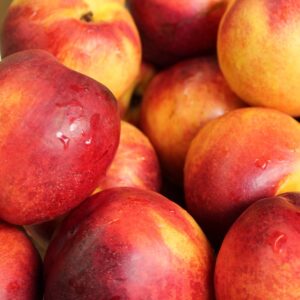
Very early. A very heavy-bearing tree with exceptional early flowering. Thin heavily to produce larger-sized fruit. Yellow, shiny fruit with a bright red blush and yellow flesh. Delicious peach flavour with a slightly acidic taste and a firm, melting texture. Clingstone. Recommended tree spacing for Mayglo Nectarine in Zambia is 4m apart in rows and 6m between rows (400 plants per hectare).
K150.00–K250.00Price range: K150.00 through K250.00
Medium to large sized, evergreen, fairly dense tree, roundish crown, lovely shade tree for gardens and parks, valued as a medicinal plant, as a source of organic pesticides, and for its timber, oil from the seed is used to make a wide variety of products such as soap, toothpaste, lotions and insecticides
Select options
This product has multiple variants. The options may be chosen on the product page
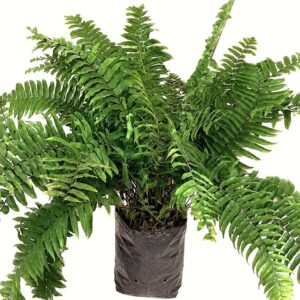
The Macho fern is a very large, lush fern native to tropical areas like Zambia. Massive, wde, arching fronds can grow up to 1.2 meters long. It thrives outdoors in shady, humid spaces or indoors as a large statement plant. Thrives in bright, indirect light but can tolerate low-light conditions. Keep it away from direct sunlight to prevent leaf burn.
The Nephrolepis exaltata ‘Fluffy Ruffles’ is a compact variety of the Boston fern with beautifully curled, bright green fronds that form a dense, bushy mound. Ideal for indoor spaces, terrariums, or shady gardens. Thrives in bright, indirect light, high humidity, and consistently moist soil. Grows 30 cm tall and 50 cm wide.
The Petticoat Fern is a Boston fern cousin with lush, elegant frilly, ruffled edges that look like layers of a skirt. Because it has a cascading habit, it thrives in hanging baskets. Place in bright, indirect light. Keep the soil evenly moist. Never let it dry out completely.
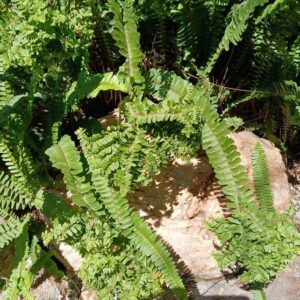
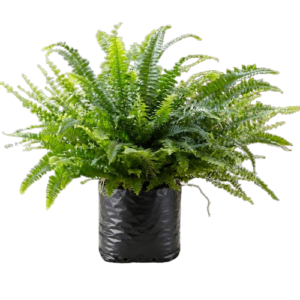
Boston Fern is a beautiful evergreen fern with an upright, spreading growth habit. It is a popular ornamental plant for gardens and is also widely grown as a houseplant. It thrives in bright, indirect light. Too much shade can result in thin, sparse, dull-looking fronds, while direct sunlight may scorch the foliage. Plant Boston Fern in moist, well-drained soil that is kept consistently damp but not soggy.